The Science of High-Performing Hybrid Teams

Great collaboration isn't about personality, intuition, or luck—it's about creating the conditions where information flows freely, people openly share their ideas, and teams continuously improve.

Basil the Beaver showing insight

Until now patterns of teamwork and collaboration were invisible, so you had to rely on intuition or plain good luck. TeamWeaver makes teamwork patterns visible so you can track and improve them systematically, like any other financial or performance metric you truly care about.


How can Science improve your meetings?

Research shows there are specific, measurable patterns that predict team dysfunction. TeamWeaver identifies these patterns and gives teams specific, actionable solutions based in science.

Same Voices Dominate

When speaking time is unequal, collective intelligence explains 43% of performance variance1. TeamWeaver measures four facets of participation equity including speaking and listening time so teams can bring out the best in every member.

Feeling Disconnected

Remote workers report 24% more feelings of disconnect and misalignment2. TeamWeaver measures connectivity and engagement in every team and department.

Destructive vs. Constructive Friction

Task conflict during planning improves outcomes, but harmful during execution3. TeamWeaver measures both constructive and destructive friction patterns.

Communication Black Holes

Information silos reduce productivity by up to 27%4. Especially critical for distributed or hybrid teams, TeamWeaver measures information velocity and silos to help teams identify and remove blockers.

  1. Woolley, A. W., Aggarwal, I., & Malone, T. W. (2015). Collective Intelligence and Group Performance. Current Directions in Psychological Science, 24(6), 420-424.
  2. Glassdoor (2025). Worklife Trends Report. Comments about "disconnect" rose 24% from 2024 to 2025.
  3. Jehn, K. A. (1995). A multimethod examination of the benefits and detriments of intragroup conflict. Administrative Science Quarterly, 40(2), 256-282.
  4. Pentland, A. (2014). Social Physics: How Good Ideas Spread—The Lessons from a New Science. Penguin Press.
Worried beaver empathizing with meeting problems

A unique research-based framework

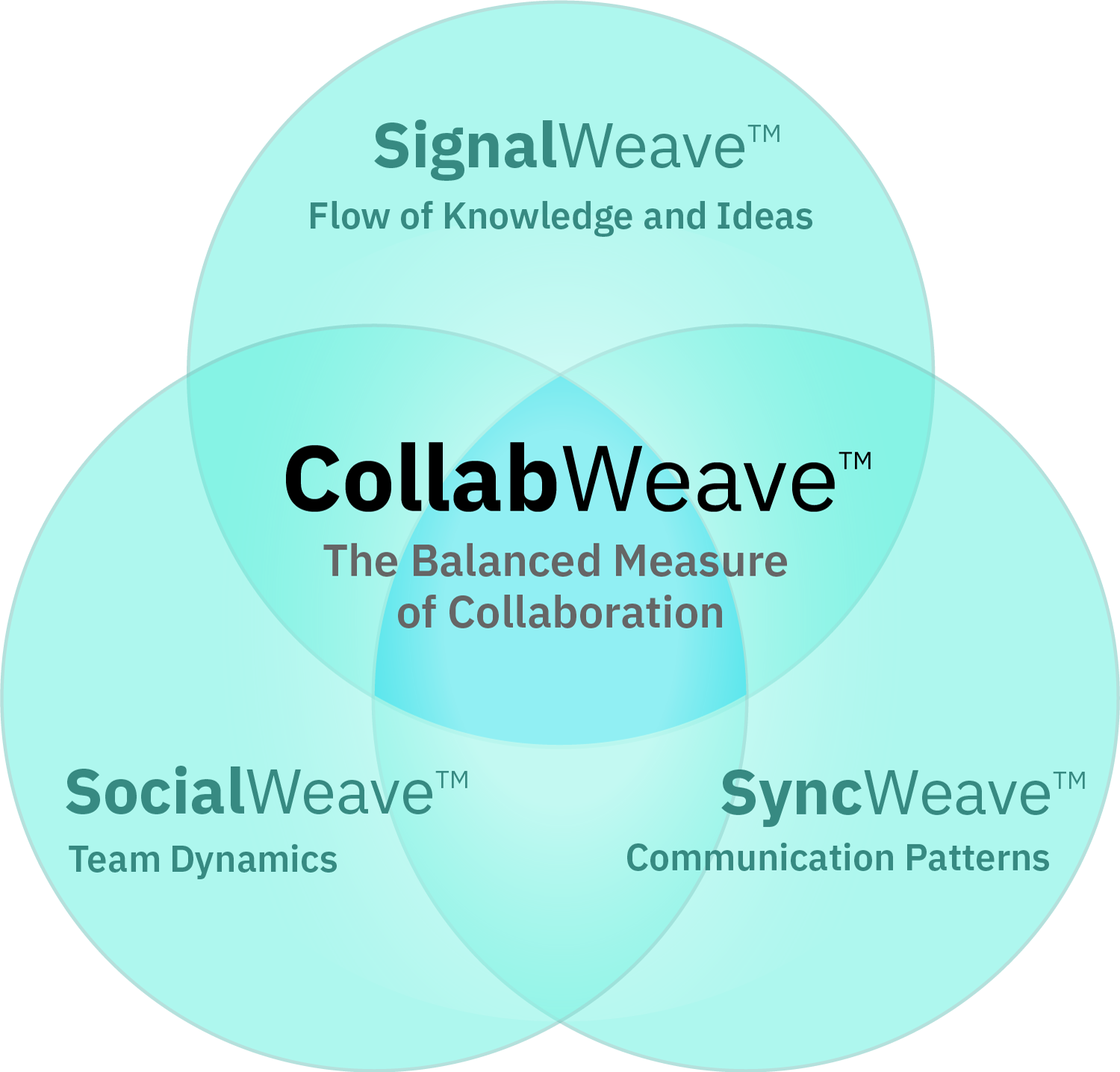
Based on research from over 100 peer-reviewed articles, studies and industry reports. TeamWeaver's proprietary methodology—CollabWeaveTM—distills collaboration to the three fundamental dimensions with measurable impact on your business.

CollabWeave Model
Network diagram showing connected vs siloed teams

SignalWeave

Flow of Knowledge and Ideas

27%
Productivity loss from information silos1

When teams don't communicate across groups, critical information stays trapped, decisions get made without key input, and coordination failures cascade.

What We Measure

  • Cross-group connectivity: Who talks to whom across team boundaries
  • Information flow velocity: How quickly critical information spreads through your organization

✓ When it's working

Teams reach across silos naturally, decisions incorporate diverse perspectives, and coordination happens smoothly.

✗ When it's broken

Teams operate in isolation, critical information stays trapped, and decisions surprise people who should have been consulted.

  1. Pentland, A. (2014). Social Physics: How Good Ideas Spread. Penguin Press.
Chart showing equal vs unequal participation patterns

SocialWeave

Team Dynamics

43%
Of performance variance explained by collective intelligence2

The #1 predictor of team effectiveness is participation equity. When everyone has equal conversational turn-taking, collective intelligence and team performance increase dramatically2,3.

What We Measure

  • Speaking time distribution: Equal conversational turn-taking across team members
  • Participation inequality: Gini coefficient showing meeting equity
  • Social perceptiveness: Average social sensitivity and empathy

✓ When it's working

Everyone contributes ideas, quiet team members feel safe speaking up, and people feel heard and valued—regardless of location.

✗ When it's broken

The same 2-3 people dominate every discussion, remote workers stay silent, and collective intelligence declines.

  1. Woolley, A. W., Aggarwal, I., & Malone, T. W. (2015). Collective Intelligence and Group Performance. Current Directions in Psychological Science, 24(6), 420-424. Equality in conversational turn-taking is a key factor in collective intelligence.
  2. Google's Project Aristotle (2012-2014). Two-year study of 180 teams found psychological safety (enabled by equal participation) is the #1 predictor of team effectiveness.
Visualization of constructive vs destructive friction patterns

SyncWeave

Discussion and Communication Patterns

Better Results
Task conflict improves planning, harmful during execution4

Not all disagreements are equal. Task conflict (debate about ideas) during planning improves decision quality. Relationship conflict (personal attacks) harms team performance at any stage4,5.

What We Measure

  • Task vs relationship conflict: Healthy debate about ideas vs personal attacks
  • Conflict timing: Pre-decision diversity vs post-decision unity
  • Response patterns: Who responds, how quickly, and constructiveness of responses

✓ When it's working

Disagreements improve decisions, conflicts stay focused on the problem not the person, and discussions reach clear conclusions.

✗ When it's broken

Disagreements turn personal, people avoid conflict entirely (groupthink), and discussions spin without reaching decisions.

  1. Jehn, K. A. (1995). A multimethod examination of the benefits and detriments of intragroup conflict. Administrative Science Quarterly, 40(2), 256-282. Task conflict during planning is beneficial; relationship conflict is always harmful.
  2. Lehmann-Willenbrock, N., et al. (2024). Behavioral synchrony enhances execution performance but diversity is crucial during planning phases.

TeamWeaver Scientific Advisory Team

TeamWeaver's methodology is guided by leading researchers in organizational behavior, communication, and team dynamics.

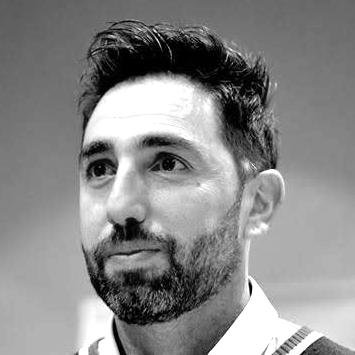
Portrait of Dr. Beta Mannix

Dr. Beta Mannix

Professor of Management at Cornell SC Johnson College of Business. Research areas: Value-driven leadership, influence, teams, and transformational change.

Portrait of Dr. Sergio García

Dr. Sergio García

Lecturer at the Public University of Navarra, Spain, and researcher at its Institute for Advanced Social Research. Research areas: Governance, collective security, and radicalization.

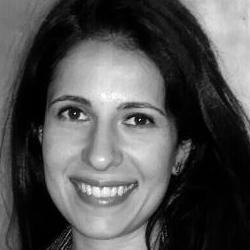
Portrait of Tiffany Darabi

Tiffany Darabi

Doctoral researcher in organizational behavior at Cornell and Boston College. Research areas: Business as a source of social good, collaborative patterns, consultation.

TeamWeaver Outline Illustration

Ready to improve your team collaboration?

Join our pilot program and start turning collaboration from guesswork into science.

Beavers celebrating collaboration success